A Masterplanned Community In A Historic Landscape
Urban Pacific described Springthorpe as a residential development intended to set new benchmarks in housing, community, and environmental design. The result was planned as a living community where architecturally designed homes, 100-year-old trees, heritage-listed buildings, public open spaces, parkland, and nature reserves were integrated into one masterplanned setting.
The 2007 guide was written to help residents understand the natural environment of Springthorpe and the responsibilities that come with living in a protected landscape. It was intended to be read alongside the Springthorpe Master Plan and Urban Design Manual.
The Springthorpe Landscape
Springthorpe is a pocket of Macleod that rises to 134 metres above sea level at Gresswell Hill and stretches south towards the city for 1.8 kilometres. The guide describes it as a leafy oasis made up of mature native trees in Red Gum Reserve, wetlands in Cascade Park, public open space, community facilities, the Village Common, the Village Hub, and the Springthorpe Country Club.
Many areas of significance have long-term protection, with parkland managed by Darebin City Council and La Trobe University. The guide frames Springthorpe as a place where history is visible in both its trees and its buildings.
Before European Settlement
Prior to European settlement, Springthorpe and the surrounding area was likely occupied by the Woiworung people. The guide notes that Woiworung movement and land use were based on seasonal hunting and gathering, with occupation of the area now known as Springthorpe occurring during winter months when the riverlands near the Yarra were prone to flooding.
The pre-European landscape was described as rolling grassy open woodland dominated by River Red Gums (Eucalyptus camaldulensis), some believed to be more than 400 years old. Higher ground around Gresswell Hill would have included denser open forest, dominated by Yellow Box (Eucalyptus melliodora), Silver Bundy (Eucalyptus nortonii), wattles including Acacia mearnsii, Acacia pycnantha, and Acacia implexa, and Cherry Ballart (Exocarpus cupressiformis), with a ground cover of native grasses.
Remaining areas of indigenous grassland species and woodland that support local wildlife can still be seen at Gresswell Hill and the adjoining La Trobe University Wildlife Reserve.
European Settlement And The Early Estates

The land now occupied by Springthorpe was first surveyed by Robert Hoddle and recorded in 1837 as the Parish of Keelbundoora. In 1839, an allotment of 1061 acres, or 429 hectares, was sold to Neil Campbell. Campbell sold the land to Scottish settler Malcolm McLean in 1842.
The property, eventually comprising both the Mont Park and Strathallan estates, was leased for grazing, dairying, and other farming activities. Much of the flatter land was cleared of vegetation for farming, with the large River Red Gums retained.
Plenty Road was constructed in 1846-1847, making the area more accessible for farming and grazing. The guide records that this attracted wealthy landowners who established large estates. During the 1850s, the McLean family returned to Scotland and leased its large estate to tenant farmers, leading eventually to smaller subdivisions. In 1888, Malcolm McLean’s only surviving son sold the family land holdings to the State Government Close Settlement Board, which sought to establish small farms in the region.
The Establishment Of Mont Park Hospital

Shortly after 1900, asylums began to be recognised as hospitals for treating mental illness rather than simply places to contain the insane. Dr Ernest Jones, the Inspector General of the Insane, sought a therapeutic natural setting away from Melbourne for patients under his care. He described the Springthorpe site as elevated, pleasantly undulating, park-like, containing several excellent building sites, and including a good proportion of excellent land.
In 1909, the Strathallan and adjacent Mont Park estates were acquired for the development of a hospital and residential facilities for approximately 1800 day and longer-term patients. The land area was large enough to support a farm tended by male patients, producing food for other metropolitan hospitals.
Plans for the new asylum at Mont Park were announced by Dr Jones in January 1910. Most building and site development occurred between 1910 and 1930, creating much of the period character that remains today.
A railway branch siding from the Macleod line was developed in 1911 to supply construction material, coal, and other supplies for patient wards, staff facilities, and recreation facilities. The cutting and benched landform that held this railway remains part of Red Gum Reserve, lining the Cherry Street Grasslands Reserve and a former park beside the wetlands.
Hugh Linaker And The Mont Park Grounds
The guide places strong emphasis on the hospital landscape. It explains that the nineteenth-century belief in the physical environment as part of patient treatment carried into the twentieth century at Mont Park. Extensive gardens were planted, largely by horticulturalist and celebrated gardener Hugh Linaker.
Linaker was born in Ballarat in 1872, one of nine children, and was apprenticed as a gardener to the Ballarat Botanical Gardens at the age of fourteen. In 1912, he was appointed landscape gardener for Mont Park. He designed bold layouts for a future 100 years ahead, and the guide credits his sense of scale with leaving a mature and impressive legacy.
In 1933, Linaker was appointed Superintendent of Parks and Gardens for Victoria. His career included hospital grounds across Victoria, the approaches to the Shrine of Remembrance, the Yarra Boulevard beautification scheme, and Yarra Bend National Park.
Military Occupation, Repatriation, And Later Closure
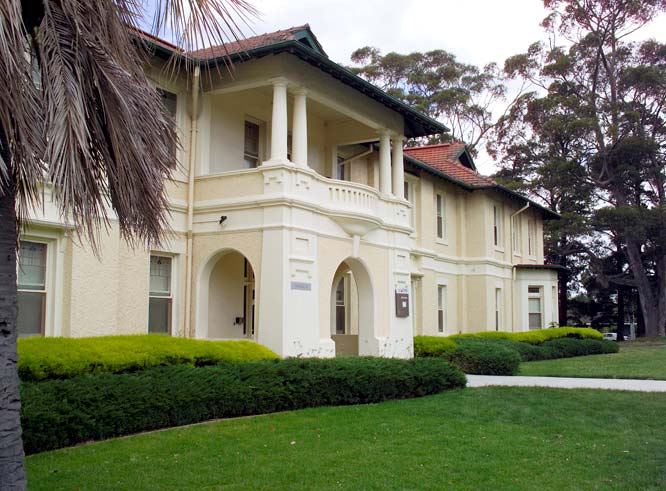
The outbreak of World War I delayed Dr Jones’s plans. In 1915, a Mont Park ward was taken over as a Convalescent Military Hospital, with servicemen accommodated in the Laundry Workers Block from 1915 to 1917. An agreement with the Defence Department in 1914 led to the construction of the Mont Park Central Block, commonly known as the Chronic Wards, for use as a military hospital before reverting to the State as part of the Mont Park complex.
In June 1918, shortly before the end of World War I, it was decided that ex-servicemen with chronic war-related illness would be treated at Mont Park. By 1920, the Department of Defence had vacated all but two wards. In 1924, a military ward known as the Plenty Building was built for military patients, while the main central block returned to the State for civilian patients.
Convalescent ex-servicemen with psychiatric illnesses were sent to Bundoora Repatriation Hospital, allowing Yarra Bend hospital to close in 1925 and transfer its remaining patients to Mont Park. In 1930, a combined church and recreation hall was completed at Mont Park. It was later named Ernest Jones Hall and Chapel in memory of Dr Ernest Jones, and now forms part of La Trobe University’s Hellenic Studies and Research Centre.
Over time, Mont Park accommodated several other hospitals, including the Gresswell, Macleod, and Plenty hospitals. By the 1980s, changing models of care led to the decommissioning of hospital services, progressive closure of wards and facilities, and de-institutionalisation of residents. The guide records that this process was finally accomplished in 2000.
Heritage Protection And New Development
The guide notes that while there was no known masterplanning for Mont Park, individual buildings appear to have been carefully placed in the natural setting. Their architectural character is linked to the early twentieth-century Public Works Department of Victoria style and to the main period of development from 1910 to 1930.
Buildings retained at Springthorpe or La Trobe University include the Mont Park Chronic Wards, now The Terraces; Ernest Jones Hall; the Mont Park Nurses Home, now The University Lodge, on Springthorpe Boulevard; the Mont Park Paying Patients Block, now La Trobe University’s Graduate School of Management; Mont Park Hospital Block E and F Ward, also known as the Laundry Workers Block; and D Ward, the Female Convalescent Ward. The Mont Park Chronic Wards and Cherry Street Avenue of Honour are protected under the Victorian Heritage Register.
The guide presents Springthorpe’s development as an attempt to respect and preserve the past while building for the future. Heritage buildings including The Terraces and the Village Common were to be restored, while new homes were designed with longevity in mind. New homes were required to meet a 5-star energy efficiency standard through the Sustainable Energy Authority of Victoria, using green technology intended to reduce energy use and household bills.
A Landscape Shaped By Farming, Hospital Grounds, And Conservation
The land now occupied by Springthorpe was used extensively for farming from the 1840s until its hospital period. Farming included grazing and dairying, with broad clearing of vegetation except for River Red Gums. A significant number of those trees were retained as part of the Springthorpe development.
Springthorpe’s development sought to conserve and enhance elements of both the pre-European landscape and the formal garden landscape of the former hospital, creating a distinctive living environment.
Vegetation Protection And Resident Responsibilities
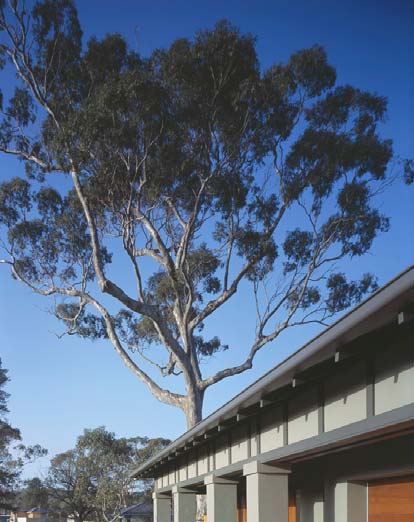
The guide explains that Springthorpe contains parkland areas and open spaces with their own character, many containing protected mature exotic and native trees. New planting consists almost entirely of native trees, shrubs, grasses, and ground cover.
To protect this landscape, Darebin City Council progressively introduced a Vegetation Protection Overlay as each development stage was completed. The overlay was intended eventually to cover the whole Springthorpe site and protect trees identified under approved Springthorpe Tree Conservation Plans.
Under the VPO, a planning permit is required from Darebin City Council to remove, destroy, or lop any tree or shrub identified on the Tree Conservation Plan. The guide reminds residents that failure to comply may result in enforcement action, penalties, or fines.
Tree Protection Zones
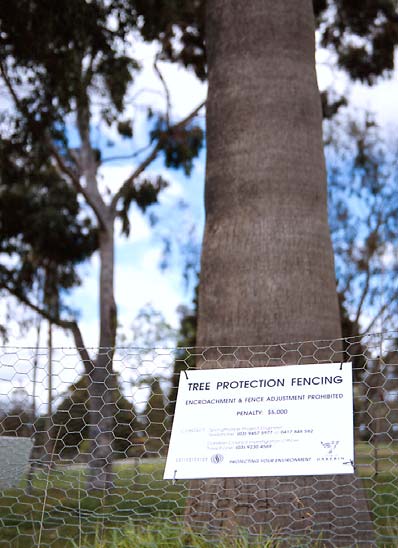
Darebin City Council advised that it would not support the removal of protected trees. Landowners were expected to design and construct homes and landscaping on the assumption that protected trees would remain. Buildings, paving, and concreting were discouraged in Tree Protection Zones.
Written consent from Darebin City Council is required to remove or relocate Tree Protection Zone fencing or any other protective barrier, and for buildings and works in a Tree Protection Zone as specified on the Tree Conservation Plan for the relevant stage. Some Springthorpe lots also have Section 173 Agreements registered on title, requiring landowners to comply with tree protection provisions.
Tree Protection Zones were based on expert assessments of current and likely future canopy size and root spread. The urban layout was designed to keep houses predominantly clear of these zones and minimise impact on significant trees.
Gardens, Weeds, And Chemical Use
The guide encourages residents to treat their own gardens as part of the broader Springthorpe environment. Indigenous and native plants are recommended because they are suited to local soil, topography, and climate, usually require less water and maintenance than exotic plants, and help gardens sit naturally within the Springthorpe landscape.
Prohibited Plant Species
The guide describes weeds as one of the largest threats to indigenous vegetation. Common garden plants including Arum Lilies, Agapanthus, Ivy, Violets, Morning Glory, and Fennel are cited as examples of plants that can invade local native landscapes. Residents must comply with Body Corporate No. 1 Rules relating to vegetation and tree controls, including the prohibited plant species list included below.
Fertilisers, Herbicides, And Pesticides
Chemical fertiliser is strongly discouraged because increased nutrient levels can allow exotic species to outcompete native grasses and vegetation. Nitrogen and phosphate can also run off into waterways, affecting frog and fish populations. Natural fertiliser is recommended. Herbicides and pesticides should be used only as a last resort because they can poison sensitive organisms.
Native Wildlife And Responsible Pet Ownership
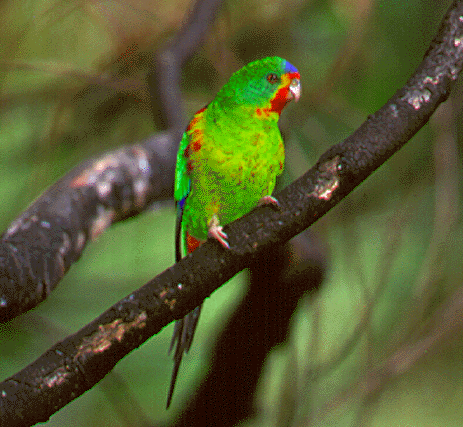
Springthorpe and its surrounding area have outstanding wildlife habitat values within Greater Melbourne. The guide highlights the endangered Matted Flax-lily (Dianella amoena), found in Stages 9 and 10 at Springthorpe. The species is protected under the Environment Protection and Biodiversity Conservation Act 1999. Urban Pacific liaised with Environment Australia, Darebin City Council, and the Department of Sustainability and Environment so that roads, services, and vegetated buffers near Gresswell Forest were sympathetic to its ecosystem.
A 1997 survey recorded species of state and national significance including:
- Swift Parrot
- Little Bittern
- Growling Grass Frog
- Regent Honeyeater
- Black Falcon
- Dwarf Galaxias
- Barking Owl
- Powerful Owl
- Sugar Glider
- Latham’s Snipe
- Yellow-bellied Sheathtail Bat
- Ring-tailed Possum
- Baillon’s Crake
- Eastern Broad-nosed Bat
- Brush-tailed Possum
Existing habitat corridors linking with Springthorpe seek to preserve and enhance the environment for native wildlife. Adjacent areas include La Trobe University Wildlife Reserve, Gresswell Forest, Cherry Street Grassland Reserve, Gresswell Hill, and the Strathallan Habitat Link between Gresswell Hill and the La Trobe University Wildlife Reserve.
Responsible Cat Ownership
- Keep your cat on your property at all times.
- Keep cats inside at night to reduce harm to wildlife and help cats live longer, stay free of disease, avoid fights, and avoid wandering onto neighbouring properties.
- Make sure your cat wears a bell that warns wildlife when it is approaching.
Responsible Dog Ownership
- Dogs must be confined within a dog-proof yard and must not wander onto streets. Wandering dogs can harm wildlife, become lost or stolen, be injured or killed by vehicles, and create hazards for pedestrians and cyclists.
- Dogs must be kept on leads when walking in public streets or parks at Springthorpe.
- Dog owners are required to clean up dog faeces, particularly in parks and streets. Dog faeces is a major E. coli pollutant when washed into wetlands, creeks, and Port Phillip Bay by stormwater.
The guide states that Darebin City Council provides animal control services, handles animal complaints, picks up stray cats, and handles pet registrations.
Stormwater, Cascade Park, And Water Sensitive Design
Most rain that falls on Springthorpe roofs and roads eventually moves through underground pipes into Cascade Park. The park was designed to be self-sustaining, with flows from the far side of Gresswell Hill directed back into Cascade Park. Cascade Park sits centrally on the western edge of Springthorpe and includes a series of structured ponds.
The drainage system was designed to meet Melbourne Water requirements and the Urban Stormwater Best Practice Environmental Management Guidelines using Water Sensitive Urban Design. Stormwater passes through cleaning processes before water flows from Cascade Park. Gross pollutant traps remove litter and coarse sediment, and aquatic planting strips help remove pollutants, nutrients, bacteria, and fine sediments. The water bodies also retain water long enough to regulate downstream flows after large storms.
Cascade Park is directly adjacent to La Trobe University’s Wildlife Reserve. Stormwater from the park flows through La Trobe University’s lake system and eventually into Darebin Creek. Springthorpe also constructed wetlands and a wet retarding basin within the University Wildlife Reserve. A smaller catchment flows into Salt Creek east of the site.
Swales and subsoil drains were included to promote water infiltration back into the ground, helping recharge groundwater and reduce urban flows into drains and streams.
Conserving Water, Saving Energy, And Helping Wildlife
The guide encourages residents to be water-wise by considering water-efficient fittings such as dual-flush cisterns, low-flow shower roses and taps, and energy-efficient dishwashers and washing machines. Garden design also affects water use, and the guide recommends using Melbourne Water guidance to reduce household water demand.
For energy efficiency, all new homes were required by the Victorian State Government through the Sustainable Energy Authority of Victoria to achieve a 5-star rating assessed by an accredited assessor. The guide links that requirement to both environmental benefits and lower household electricity, heating, and cooling bills.
We are very lucky to share a country with some of the most unique native wildlife on earth. An indigenous garden, practicing safe pet ownership and protecting stormwater systems are just some of the ways we can help protect all creatures great and small.
The guide notes that much of Springthorpe’s wildlife remains hidden from view. If an injured or distressed animal is found, the guide advises calling Wildlife Victoria. The phone number printed in the 2007 guide should be checked before publication because contact details may have changed.
Appendix 1: Prohibited Plant Species List
| Botanical name | Common name |
|---|---|
| Acacia baileyana | Cootamundra Wattle |
| Acacia decurrens | Early Black Wattle |
| Acacia elata | Cedar Wattle |
| Acacia floribunda | White Sallow Wattle |
| Acacia longifolia var. longifolia | Sallow Wattle |
| Acacia longifolia var. sophorae | Coast Wattle |
| Acacia pravissima | Ovens Wattle |
| Acacia prominens | Golden Rain Wattle |
| Acacia retinodes var. retinodes | Wirilda |
| Acacia saligna | Golden Wreath Wattle |
| Acer negundo | Ghost Maple |
| Agapanthus praecox ssp. Orientalis | Agapanthus |
| Alstroemeria aurea | Alstroemeria |
| Anredera cordifolia | Madeira Wine |
| Araujia hortorum | White Bladder-flower |
| Arctotis venusta | White Arctotis |
| Aristea ecklonii | Aristea |
| Arum italicum | Italian Cuckoo-pint |
| Asparagus asparagoides | Bridal Creeper |
| Asparagus scandens | Asparagus Fern |
| Carpobrotus aequilaferus | Angled Pigface |
| Carpobrotus edulis | Hottentot Fig |
| Chasmanthe floribunda | African Corn-flag |
| Clematis vitalba | Travellers Joy |
| Coprosma repens | New Zealand Mirror-bush |
| Cordyline australis | Cabbage Tree |
| Cortaderia jubata | Pink Pampas Grass |
| Cortaderia selloana | Pampas Grass |
| Cotoneaster divaricata | Cotoneaster |
| Cotoneaster glaucophyllus | Cotoneaster |
| Cotoneaster pannosus | Cotoneaster |
| Crataegus monogyna | Hawthorn |
| Crocosmia x crocosmiiflora | Montbretia |
| Cytisus multiflorus | White Spanish Broom |
| Cytisus palmensis | Tagasaste or Tree Lucerne |
| Cytisus scoparius | English Broom |
| Delairea odorata | Cape Ivy |
| Dietes iridioides | Dietes |
| Dimorphotheca ecklonis | Dimorphotheca |
| Dimorphotheca pluvialis | Cape Marigold |
| Dipogon lignosus | Dipogon |
| Erica lusitanica | Spanish Heath |
| Fraxinus rotundifolia ssp. rotundifolia | Desert Ash |
| Freesia species and hybrids | Freesia |
| Gazania linearis | Gazania |
| Gazania rigens | Gazania |
| Genista linifolia | Flax-leaf Broom |
| Genista monspessulana | Montpellier Broom |
| Grevillea rosmarinifolia | Rosemary Grevillea |
| Hakes drupacea | Sweet Hakes |
| Hakes laurina | Pincushion Hakes |
| Hakes salicifolia | Willow-leaf Hakes |
| Hakes sericea | Needle Hakes |
| Hedera helix | Ivy |
| Ipomoea indica | Purple Morning-glory |
| Ixia spp. | Ligustrum lucidum |
| Large-leaf Privet | Lonicera japonica |
| Japanese Honeysuckle | Myriophyllum aquaticum |
| Parrots Feather | Oenothera glazioviana |
| Evening Primrose | Olea europaea ssp. europaea |
| Olive | Opuntia spp. |
| Prickly Pear | Oxalis spp. |
| Oxalis / Wood sorrel | Paraserianthes lophantha |
| Cape Wattle | Passiflora mollissima |
| Banana Passionfruit | Pennisefum alopecuroides |
| Swamp Foxtail-grass | Pennisetum clandestinum |
| Kikuyu | Pennisetum villosum |
| Feathertop | Phoenix canariensis |
| Canary Islands Date Palm | Physalis peruviana |
| Cape Gooseberry | Pinus nigra var. maritima |
| Corsican Pine | Pinus pinaster |
| Cluster Pine | Pinus radiata |
| Monterey or Radiata Pine | Pittosporum eugenioides |
| Pittosporum | Pittosporum undulatum |
| Sweet Pittosporum | Polygala myrtifolia |
| Myrtle-leaf Milkwort | Prunus cerasifera |
| Cherry-plum | Prunus cerasifera `Nigra' |
| Purple-leaf Cherry-plum | Prunus laurocerasus |
| Cherry Laurel | Prunus lusitanica |
| Portugal Laurel | Psoralea pinnata |
| Blue Psoralea | Pyracantha angustifolia |
| Orange Firethorn | Pyracantha crenulata |
| Nepal Firethorn | Pyracanfha fortuneiana |
| Firethorn | Rhamnus alaternus |
| Italian Buckthorn | Rumex sagittatus |
| Climbing Dock | Salix cinerea |
| Grey Sallow | Schinus molle |
| Pepper Tree | Senecio angulatus |
| Climbing Groundsel | Solanum maurifianum |
| Tobacco Nightshade | Solanum pseudocapsicum |
| Madeira Winter Cherry | Sollya heterophylla |
| Bluebell Creeper | Sparaxis bulbifera |
| Harlequin-flower | Sparaxis tricolor |
| Tricolor Harlequin-flower | Spartium junceum |
| Spanish Broom | Stipa spp |
| Spear-grass | Tradescantia albiflora |
| Wandering Jew | Tritonia lineate |
| Lined Tritonia | Typha latifolia |
| Great Reedmace | Verbascum fhapsus |
| Great Mullein | Vinca major |
| Blue Periwinkle | Viola odorata |
| Common Violet | Viola riviniana |
| Common Dog-violet | Watsonia borbonica |
| Watsonia | Watsonia marginata |
| Watsonia | Watsonia meriana `Bulbillifera' |
| Bulbil Watsonia | Watsonia versfeldii |
| Watsonia | Zantedeschia aethiopica |
Appendix 2: Native Trees At Springthorpe
| Botanical name | Common name | Comment |
|---|---|---|
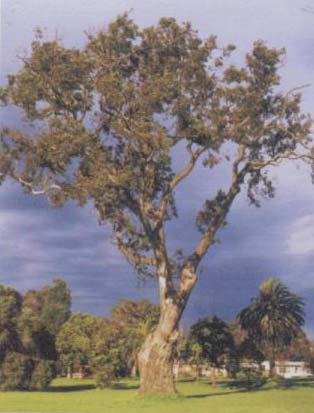
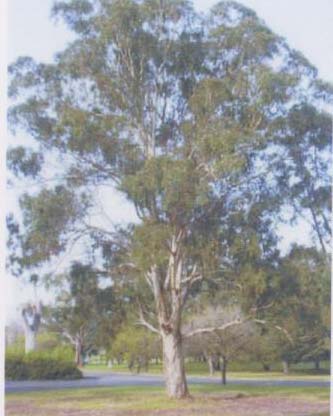
| Eucalyptus camaldulensis | River Red Gum | To the middle and southern areas of Springthorpe, mature giant River Red Gums provide dramatic landscape features. The guide describes them as 15 to 20 metres high and estimated to be over 400 years old. |
| Eucalyptus melliodora | Yellow Box | Good remnant Yellow Box specimens are scattered throughout the site. The guide describes a wide-spreading evergreen tree with bird- and insect-attracting flowers from September to February, with rough pale brown bark at the base and smooth bark on upper branches. |
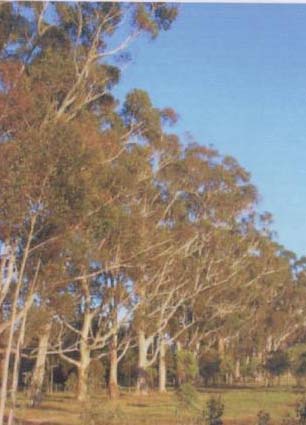
| Eucalyptus cladocalyx | Sugar Gum | The Cherry Street Sugar Gum Avenue of Honour was planted in 1919 as a living memorial to World War I servicemen. The guide notes that the Avenue of Honour Sugar Gums are believed to have been grown from seed by patients in Hugh Linaker’s vocational training nursery. |
| Lophostemon conferta | Queensland Brush Box | A native rainforest tree ranging from Newcastle in New South Wales to Bowen in north Queensland. |
| Corymbia maculata | Spotted Gum | Spotted Gums are noted for good form, unusually long straight boles, and distinctive smooth mottled bark. The guide records several scattered throughout Springthorpe. |
| Eucalyptus occidentalis | Flat-topped Yate | Flat-topped Yates grow to around 20 metres tall with a 5 metre spread and a distinctive broad, flat crown. The lower bark is rough grey, somewhat fibrous and flaky; higher bark is smooth white, pink, or yellowish grey. |
Appendix 3: Exotic Trees At Springthorpe
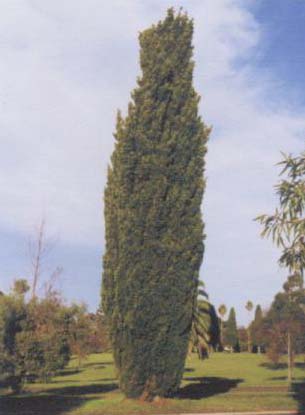
| Botanical name | Common name | Comment |
|---|---|---|
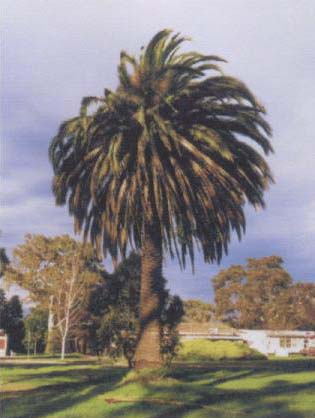
| Phoenix canariensis | Canary Island Date Palm | The avenue of semi-mature Canary Island Date Palms in Ernest Jones Drive was planted by Hugh Linaker in the early 1900s. Some palms were removed and transplanted during Springthorpe development works and replaced at completion of each stage. |
| Washingtonia robusta | Washington Palm | Washington Palms, sometimes known as Skydusters or Mexican Fan Palms, can grow up to 20 metres high. They are native to north-western Mexico and Baja California. |
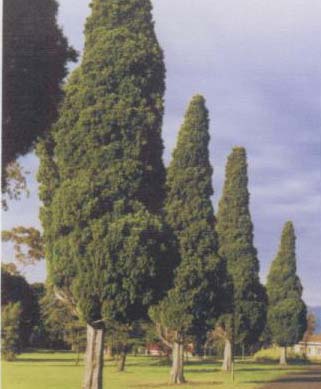
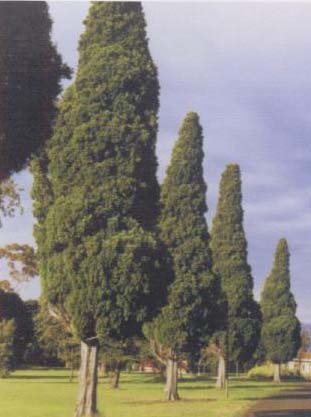
| Cupressus torulosa | Bhutan Cypress | The Ernest Jones Drive Bhutan Cypress avenue is described as probably the most dramatic planting at Springthorpe. Hugh Linaker was responsible for similar avenue planting at the Shrine of Remembrance in St Kilda Road, Melbourne. |
| Cupressus macrocarpa | Golden Cypress | The majestic Golden Cypresses at Springthorpe are some of the original planting of the site and are described in the guide as among the best specimens in Victoria. |
| Sequoia sempervirens | Red Wood | The guide records two Red Wood specimens at Springthorpe: one at the southern end of Horizon View and one immediately north of the Springthorpe Country Club car park. |
| Cupressus sempervirens Stricta | Pencil Pine | A number of Pencil Pines have been retained in the Springthorpe Secret Garden, Stage 1. |
Source
This article was adapted from the Springthorpe Environmental Awareness Guide, published in 2007. The guide should be checked against the Springthorpe Master Plan, Urban Design Manual, current council requirements, and current contact information before publication.