
This HTML article adapts the Springthorpe and La Trobe Heritage Project 2014/15 document, The Springthorpe Area: a Brief History, for easier reading and searching.
The Springthorpe Area: a Brief History
Introduction
This brief overview of the phenomenally rich history of the Springthorpe area and surrounds is a compilation of extracts, information and images from many different sources.
It is a resource for the Springthorpe and La Trobe Heritage Project, an initiative of the Springthorpe community in partnership with La Trobe University, Darebin Council and Yarra Plenty Regional Library.
The Springthorpe Owners Corporation received a $15,000 grant under the Public Record Office Victoria Local History Grants Program. A project management team (including Springthorpe, La Trobe and Darebin) will be formed and an historian will work with volunteers as they gather information and tell the story of ‘place’ and the people who lived and worked in the area. Key themes include:
- Aboriginal and European settlement history
- Landscape design and horticultural history
- Hospital and psychiatric care history
- Architectural and heritage-listed buildings history
- Natural, botanical and ecological history.
Materials collected may eventually be stored on an online local history portal supported by La Trobe University and Darebin Council. In turn, this may inform a future heritage trail, interpretive signage, exhibition space and local history app.
For more information and if you would like to be involved in this exciting project, please do not hesitate to contact me on 0402 152 634 or at nicholas.abbey@optusnet.com.au.
Nicholas Abbey,
Co-chairperson, Springthorpe Owners Corporation
Local Wurundjeri People
The area of Springthorpe and surrounds is the traditional country of the Wurundjeri people. Their language is known as Woiwurrung. The Wurundjeri people's territory extends east to the Werribee River, north-west to Mount Macedon, east to Mount Baw Baw, north to the Great Dividing Range behind Healesville, south to Mordialloc Creek and resides on the northern boundaries of the swamp lands of Koo Wee Rup and Carrum Carrum (Bill Nicholson Jnr., Wurundjeri traditional owner).
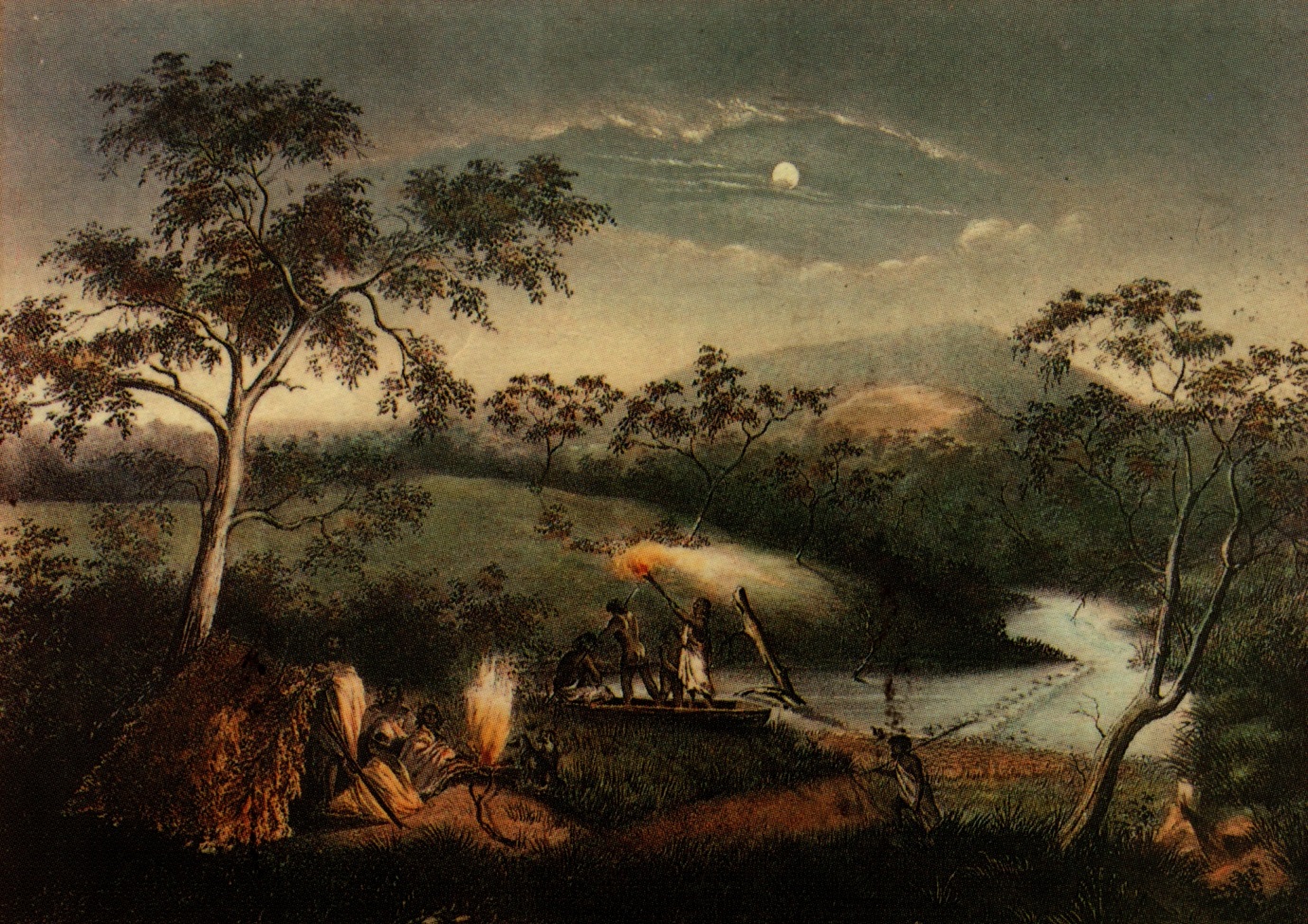
Aboriginal people fishing and camping on Merri Creek. Lithograph by Charles Troedel, 1864
Prior to colonisation, the Wurundjeri lived in this broader area for may be at least 40,000 years. During this extraordinary length of time, the Wurundjeri peoples experienced an ice age, volcanic activity, major changes in the landscape, the extinction of some megafauna and the rising of the seas, which flooded coastlines, forming Bass Strait and Port Phillip Bay 9,000 years ago (Broome, 2005). Oral history and creation stories from the Wurundjeri describe the flooding of the bay.
Large wetlands existed in the area that were used by the Wurundjeri people. Early Europeans visiting the area observed the rich nature of these wetlands; in particular, the abundance of wetland birds such as Brolgas and ducks. The wetlands provided a plentiful supply of edible plants, eels, freshwater mussels and fish. Evidence of the use of the area by Wurundjeri people is observable in the scars on trees (including a scar tree in the La Trobe University Wildlife Sanctuary) and fragments of stone tools. Slabs of bark were removed to make canoes, containers, roofing material and shields.
In Victoria, there are close to forty cultural-language groups formed by hundreds of clans (Broome, 2005 and Victorian Aboriginal Corporation for Languages). The Wurundjeri belong to a larger affiliation of groups known as the Kulin Nation (from the word ‘kuliny’ meaning man), which occupied the southcentral portion of what would become Victoria.
The peoples of the Kulin Nation share similar languages and the same spirit ancestors. The Kulin trace their ancestry to a creative spirit known as Bunjil, the eaglehawk, who shaped the surface of the land and made it bountiful and provided a code for living (Broome). Bunjil was a headman of the Kulin who had two wives and a son, Binbeal, the god of rainbows. Bunjil was assisted by six powerful wizards.
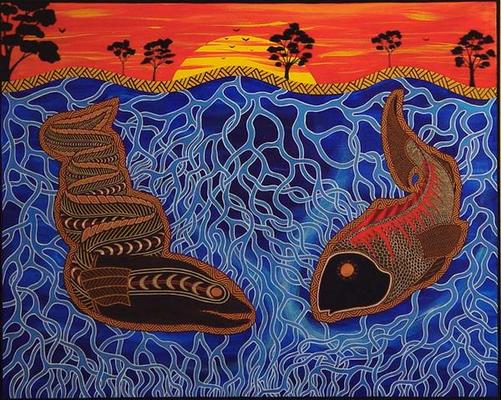
Life within Birrarung (Yarra River), Mandy Nicholson, Wurundjeri-coranderrk.
Billibellary
Billibellary was an astute, diplomatic and visionary leader, described as tall and powerfully built with an influence and reputation that extended well beyond his clan (Ellender and Christiansen; Broome). He led his people through an incredibly difficult time of change. When John Batman explored the Yarra and its tributaries, he met Billibellary, one of the eight clan elders he signed a treaty with in 1835.
Coinciding with the early years of European settlements in the broader area, Billibellary was a respected elder in the Wurundjeri-willam clan, one of the clans forming a part of the Wurundjeri people and the original occupants of what are now the northern suburbs of Melbourne. A clan was a group, perhaps 300-500 strong, composed of people who were all of one totemic division (or moiety). His clan was one of five groups sharing a common dialect. As Richard Broome also notes:
Each Aboriginal person had multiple identities, that of their moiety, clan, language group and confederation, which most European observers found almost impossible to fathom.
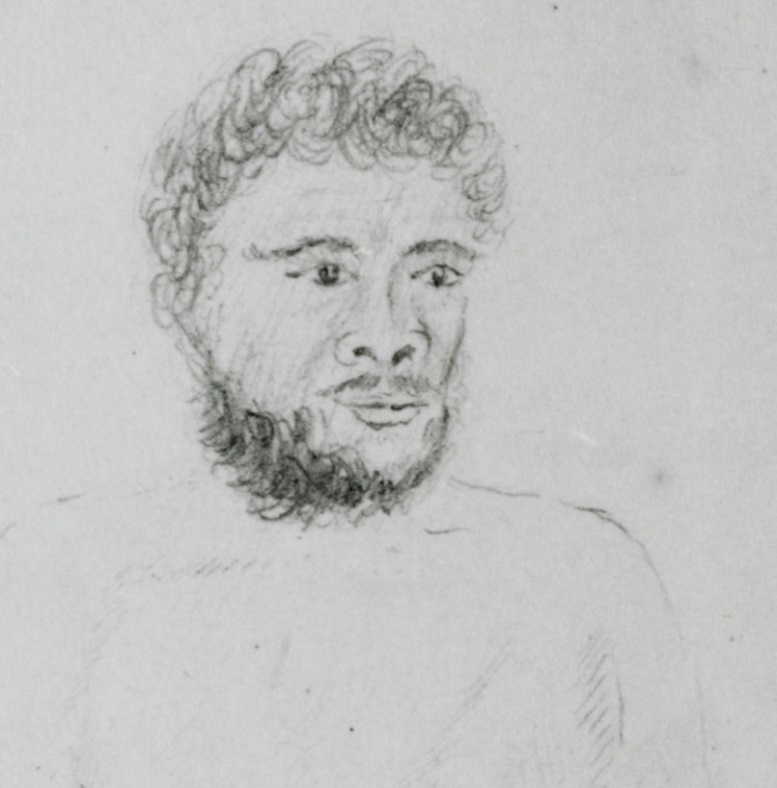
Billibellary, portrait by William Thomas, picture collection, State Library of Victoria. Billibellary named a daughter, Susannah, in honour of Susannah Thomas, the wife of William Thomas, who was Assistant Protector of Aborigines in the Port Phillip district. Billibellary died in 1846 of a lung inflammation, an ailment which killed many of his people in the period after contact with Europeans.
First Europeans
When the first Europeans arrived in the Bundoora area in 1835 (formerly the Parish of Keelbundora named after Keelbundoora, a young boy present at the signing of Batman’s treaty) they noted its ‘parkland’ appearance – well spaced trees with an understorey of grasses, herbs and forbs.
The area was surveyed in 1837 by William Wedge-Drake, principally to enable the sale of land. Batman’s treaty was a catalyst for the rush of immigrants from Van Diemen’s Land, the proclamation of the Port Phillip settlement in September 1835 and the beginnings of Melbourne town. The land included all of Melbourne’s northern suburbs.
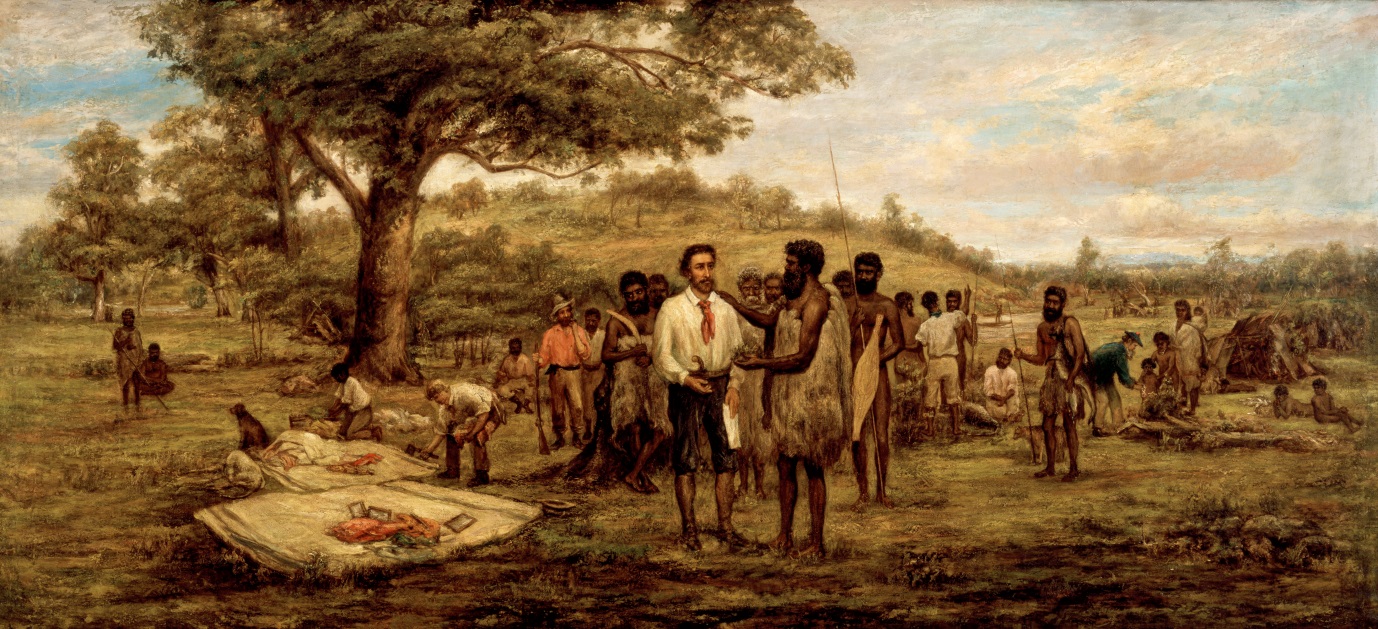
A depiction of Batman's meeting with Wurundjeri people and the signing of Batman's treaty in 1835. John Wesley Burtt, circa 1875, artist. Billibellary was one of the eight clan elders present.
The land was auctioned in Melbourne in 1838 and the Bundoora area was divided into two sections of approximately 400 hectares. Most of the land was bought by land speculators and soon resold as much smaller farms. The farms were mostly used for sheep grazing and grain production. The wheat produced in the area was considered of high quality. Within the Wildlife Sanctuary there are fence posts which date from the time of settlement. These were cut from Red Gum and Yellow Box timber.
In 1839, the land was sold as an allotment to Neil Campbell. He, in turn, sold the land to Scottish settler Malcolm McLean in 1842. The McLean family named their estate ‘Strathallan’. Much of the flatter land was cleared of vegetation for farming with the exception of the large River Red Gums, many of which were retained.
During the 1850s, the McLean family returned to Scotland and leased its large estate to a number of tenant farmers for grazing, dairying and other activities.
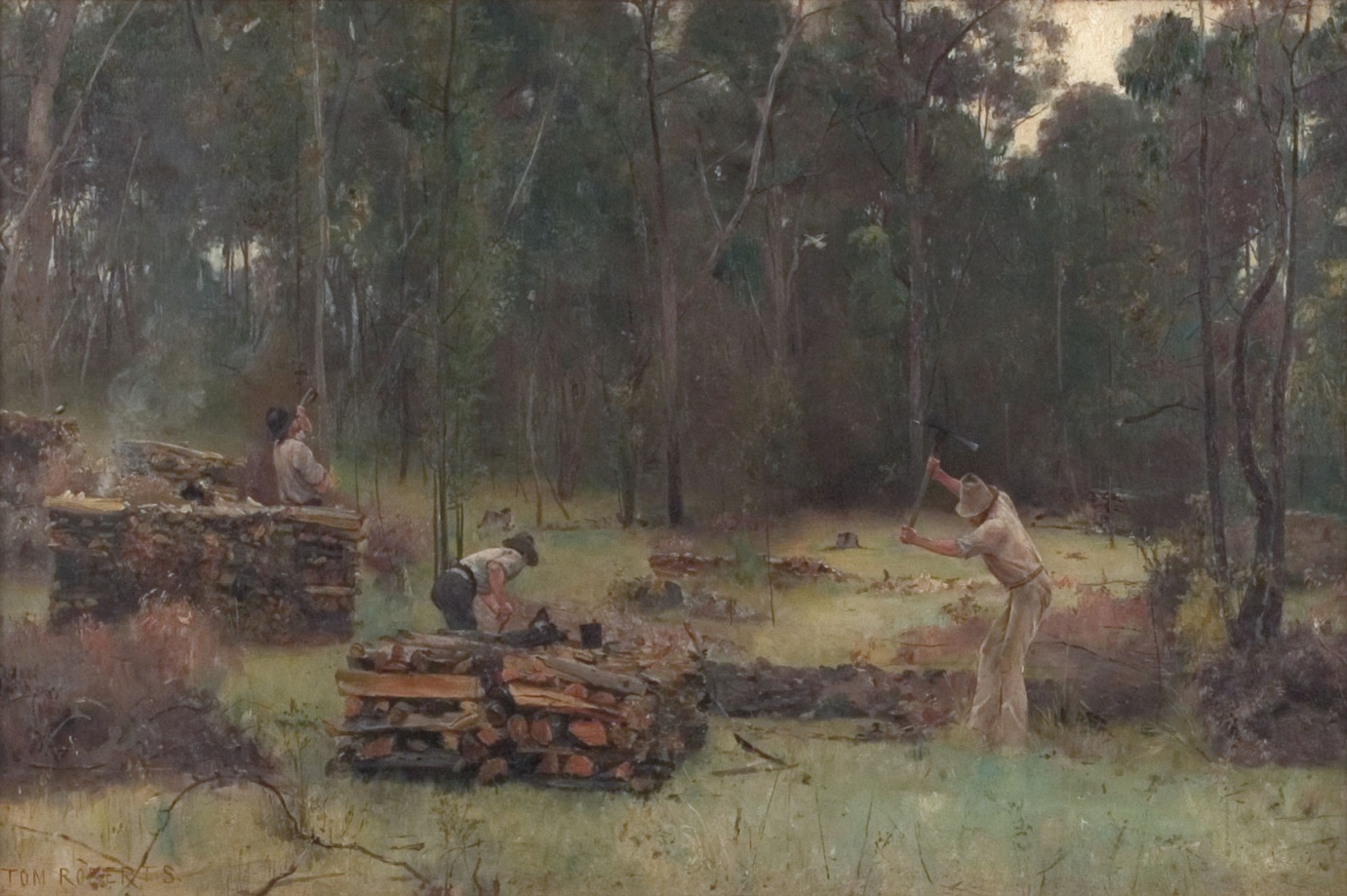
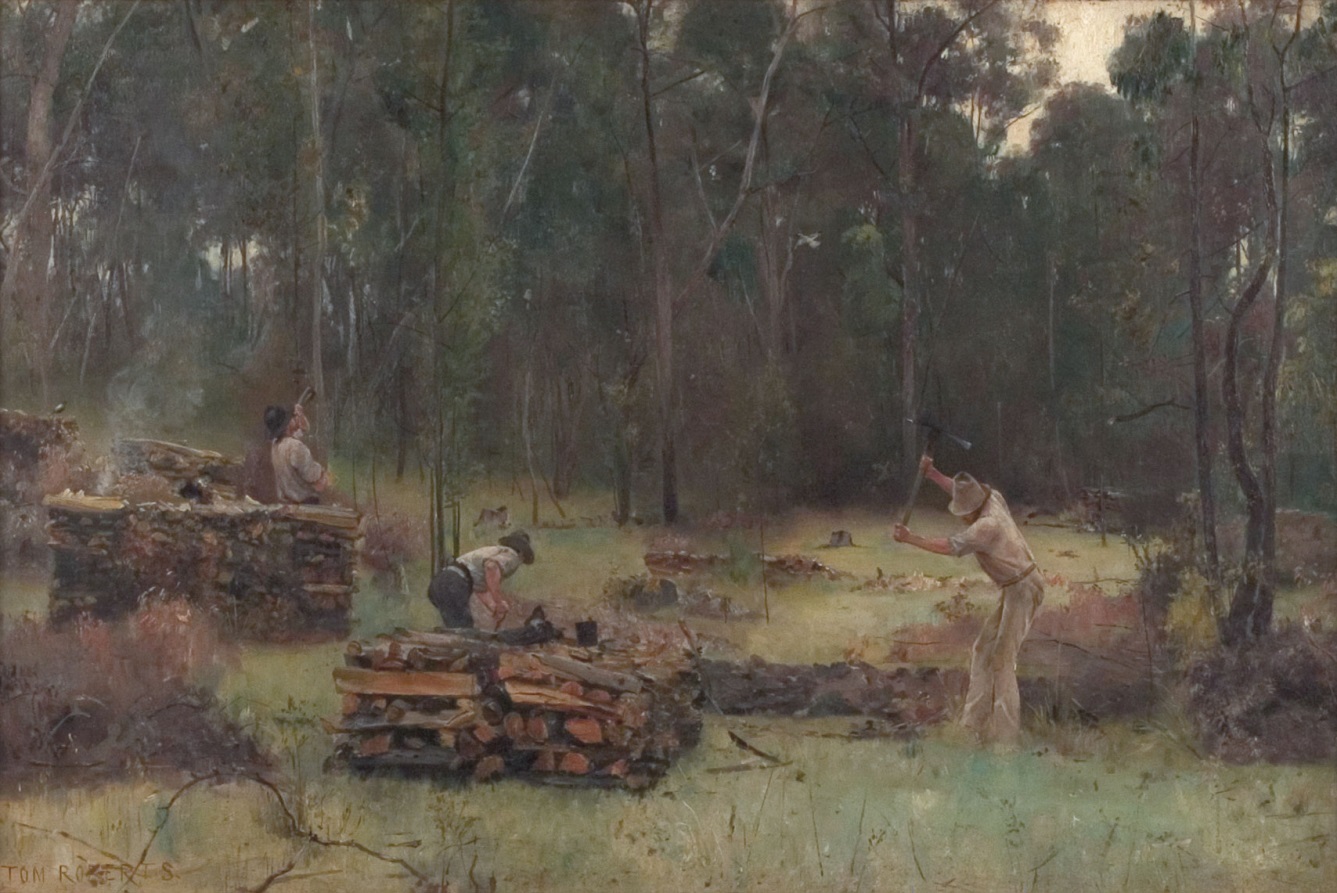
Wood splitters, Tom Roberts, painted during the early Heidelberg School period, 1886
Strathallan Estate and Macleod
In 1892, after protracted negotiations and purchasing much of the land, Charles Henry James set out to promote the Strathallan estate, three miles beyond the Heidelberg rail terminus, on the promise that the railway would soon be extended to Eltham. Much of Macleod was part of the Strathallan estate.
The railway did not reach Eltham until 1902. James was declared bankrupt in 1897 and the land passed into the hands of the mortgagor, the Commercial Bank of Australia. The Bank divided the land and sold part of it to Edith and Malcolm Macleod and the remaining 247 acres to the grazier, Michael Le Grand.
Construction of Macleod Station greatly facilitated subdivision, with the first development occurring to the east of the Heidelberg to Hurstbridge rail line from 1910 (Macleod Progress Association). However, the area to the west of the railway, bordered by the rail line and the hilly rises of Mont Park and Gresswell Forest, remained largely untouched by development until the late 1960s/'70s.
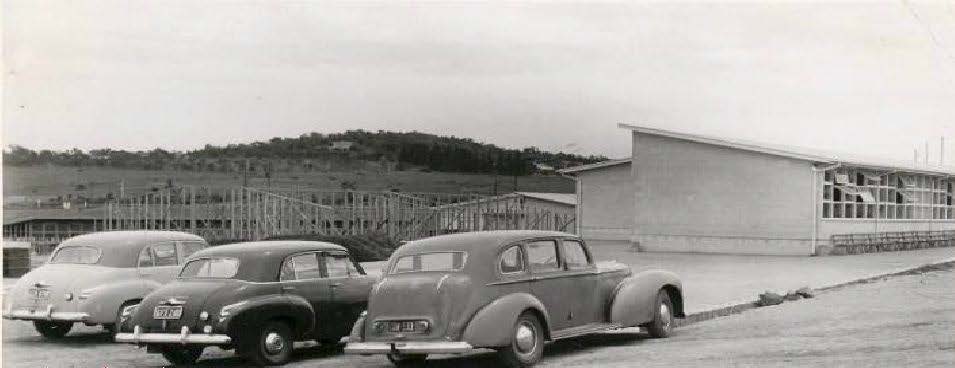
The construction of Macleod High School, which opened in 1954. Gresswell Hill in the background, which was formed as a result of a volcanic eruption around 380 million years ago.
Macleod Park was established as part of the development of the Golf Links Estate by Freehold Assets Pty Ltd in 1921. The Park, centrally located in what would become the heart of the Macleod Village Shopping Centre and running along the railway line to Macleod Station, was developed to provide recreational facilities for the residential subdivision. The 'sales plan' for land in the suburb of ‘MacLeod’ (sic) notes the following:
'For private sale by order of H. W. Gepp, Esq. … MacLeod will be one of the garden suburbs of Melbourne because the building land adjoining the Railway Station on either side has been scientifically planned, and right at the station on the east is a large municipal garden reserve, providing areas for sports grounds, tennis courts, bowling greens and shady tree plantations, and these will be right in the town centre. It will make possible the “suburb beautiful” in a form never attempted and not possible in most suburban centres of the metropolis' (National Library of Australia catalogue entry on Golf Links Hill Estate, MacLeod).
An early precursor of the thinking behind the Springthorpe estate design and planning, the 'City Beautiful' movement on which this concept was based was an influential town planning model in the late 19th and early 20th centuries.
Mont Park
Just before WW1, the State Government acquired the Mont Park site for the construction of a hospital and asylum and built a spur railway line to connect it to the main Hurstbridge line, passing over Macleod's land. A station opened in 1911 and was subsequently named for him and a fledgling township emerged. Malcolm Macleod, by this time a local councillor, secured construction of a new railway station. Heidelberg Council named the new station after him
The spur line to Mont Park, funded by the State Health Department, was built and opened in 1911. This line ran from the western side of the new Macleod Station in a north-westerly direction to terminate within the grounds of the asylum. The Mont Park spur line was officially closed on 30 June 1964 (Victorian Railways Timeline, n.d.), but the tracks were not lifted until the late 1960s/early1970s.
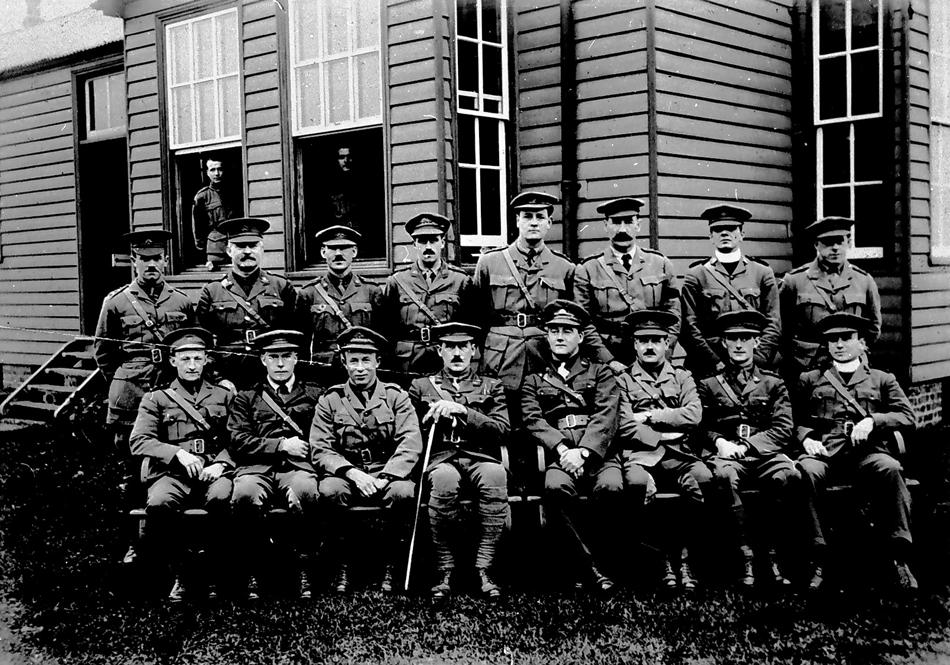
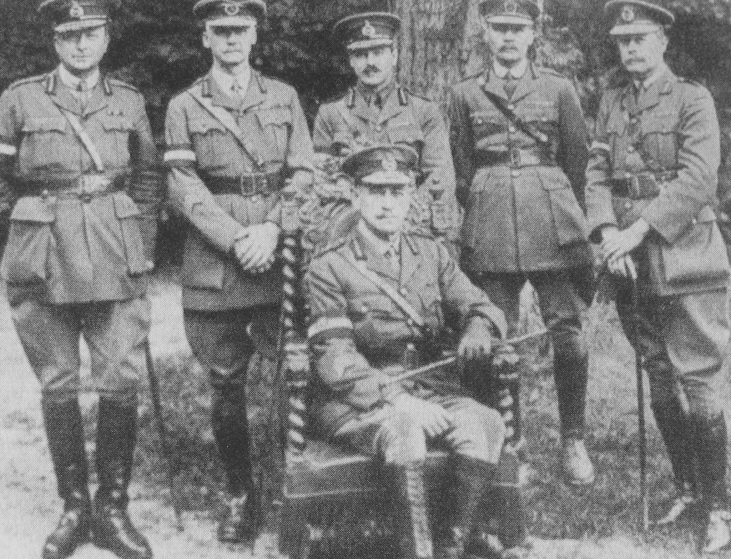
Military officers outside the Mont Park Hospital. Two padres are among the group. Photo 1919.
Mont Park opened in 1912 as a productive farm for the treatment of the mentally ill. Bundoora Park was acquired by the government after World War I for the Bundoora Repatriation Hospital, which opened in 1924 as an after-care centre for ex-servicemen suffering from nervous disorders discharged from the Military Mental Block at Mont Park. The Repatriation Department approached the Australian Red Cross Society to establish a training farm for tuberculosis patients.
The Red Cross farm, known as the Janefield Sanitorium, operated from 1920 to 1933. It reopened in 1937 as the Janefield Colony for Mental Defectives (children) and in 1962 was renamed the Janefield Training Centre. A third psychiatric institution, Larundel, opened at Bundoora in 1949, in premises used from 1942 as a training depot for the Women's Auxiliary Australian Air Force, and after the war as emergency accommodation for homeless families.
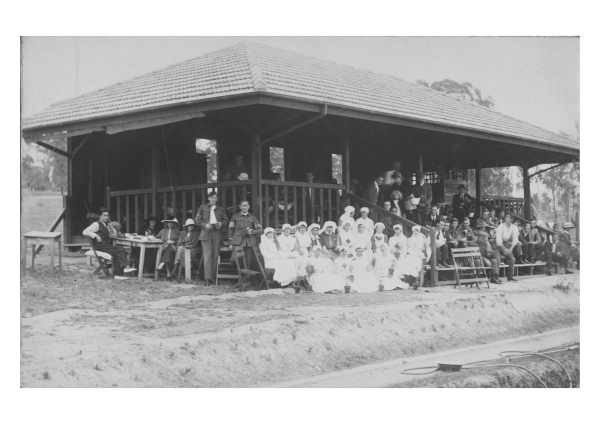
Mont Park – staff, circa 1918 – 1920. State Library of Victoria.
Mont Park Hospital was built with the aim of closing the Yarra Bend Asylum, and represented a new start in twentieth-century psychiatric care.
The new Inspector General of the Insane, Dr Ernest Jones, wanted an extensive site that would permit:
… an organised scheme for the provision of institutional accommodation, sufficient if needs be, to dispense with the metropolitan hospitals entirely.
Jones was looking for a therapeutic natural setting away from Melbourne suitable for patients under his care. He described the Springthorpe site as
elevated… pleasantly undulating and park-like, containing several excellent building sites and a good proportion of excellent land.
The “chronic insane” were considered not to be able to function in the wider community or be supported by their families, due to such conditions as recurrence of symptoms, intellectual disability, epilepsy, alcohol-induced psychosis, senile dementia and symptoms of syphilis.
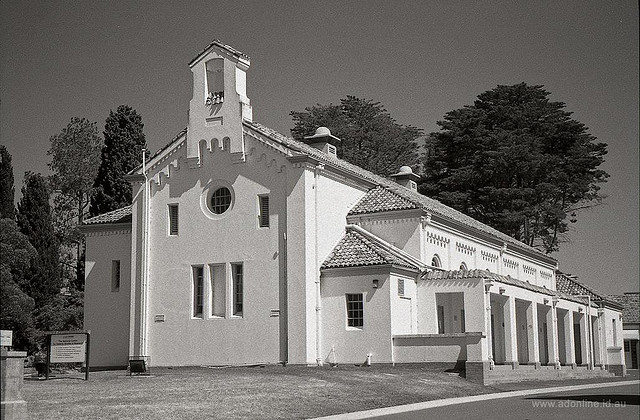
Ernest Jones Hall, built in 1927, provided a chapel and community facility for patients and staff. Named after the Inspector General of the Victorian Lunacy Department, Dr Ernest Jones.
The Hospital developed a large farm, because farm work was considered part of the therapy for mental illness; besides, it made the hospital self-sufficient in fresh food.
Women patients were employed in laundry work for the hospital, (then considered part of the therapy) and the Laundry Workers Block was built for women patients in 1911. People with intellectual disabilities were classed as insane and kept in the same institutions as the mentally ill. At Mont Park they were accommodated separately, reflecting the changing trend, in a block called the ‘Idiot Ward’. The intellectually disabled men and boys accommodated there also worked on the farm.
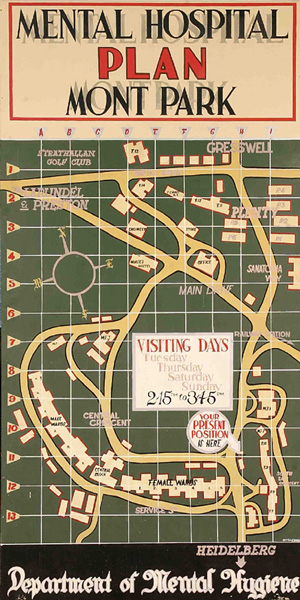
Mont Park Mental Hospital Plan, 1959, acrylic on masonite (Cunningham Dax Collection).
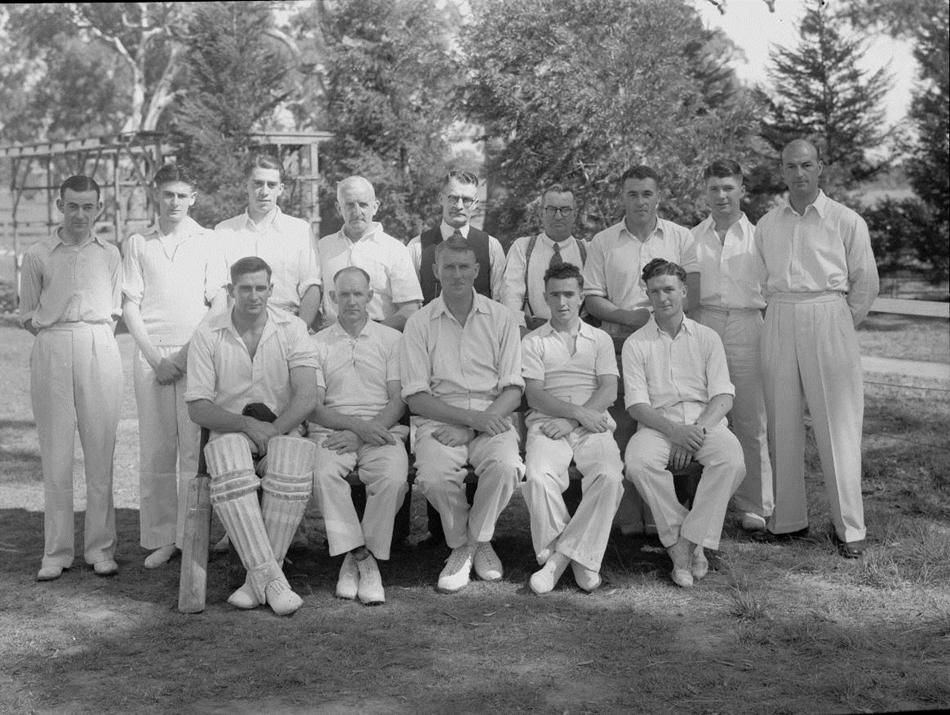
International Harvester Company (IHC) Melbourne cricket team at Mont Park, 30 March 1941. This team played an IHC team from Geelong.
Dr John Springthorpe
The Springthorpe estate was named after Dr John Springthorpe, the distinguished visiting physician to hospitals including Mont Park and who pioneered work with war trauma victims. Springthorpe graduated from the University of Melbourne with distinctions in Arts and Medicine. In 1879, he joined the Victorian Lunacy Department. He had a practice in Collins Street. Given his great energy and dedication, lively in mind and action, Springthorpe was appropriately known as 'Springy'.
Springthorpe was a leading public advocate for people with a mental illness or intellectual handicap. He argued forcefully for lunacy reform. In a paper read at the Medical Society of Victoria in 1903, he was particularly critical of overcrowding, poor sanitation, lack of patient classification, understaffing, excessive patient restraint and inadequate treatment equipment. He also condemned the degree of confinement patients endured, when compared with asylums overseas:
For years in the New York asylums, the policy of open doors, but still with us locks and keys! For the New York insane, freedom of exercise, but with us, more than half the total number of patients confined all day long within high walls! (Springthorpe, 1903).
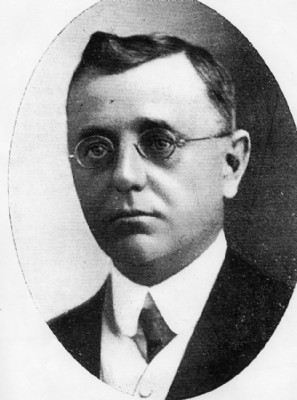
Springthorpe spent several years overseas during World War I where he developed a special interest in the management of shell-shock and other war neuroses. He held that compassion and psychotherapy could alleviate shell-shock (what would now be called post-traumatic stress disorder). He continued to treat returned soldiers with mental disorders until shortly before his death in 1933. He also took an active interest in child health and child welfare, providing a report to the Victorian Government on the former topic in 1926.
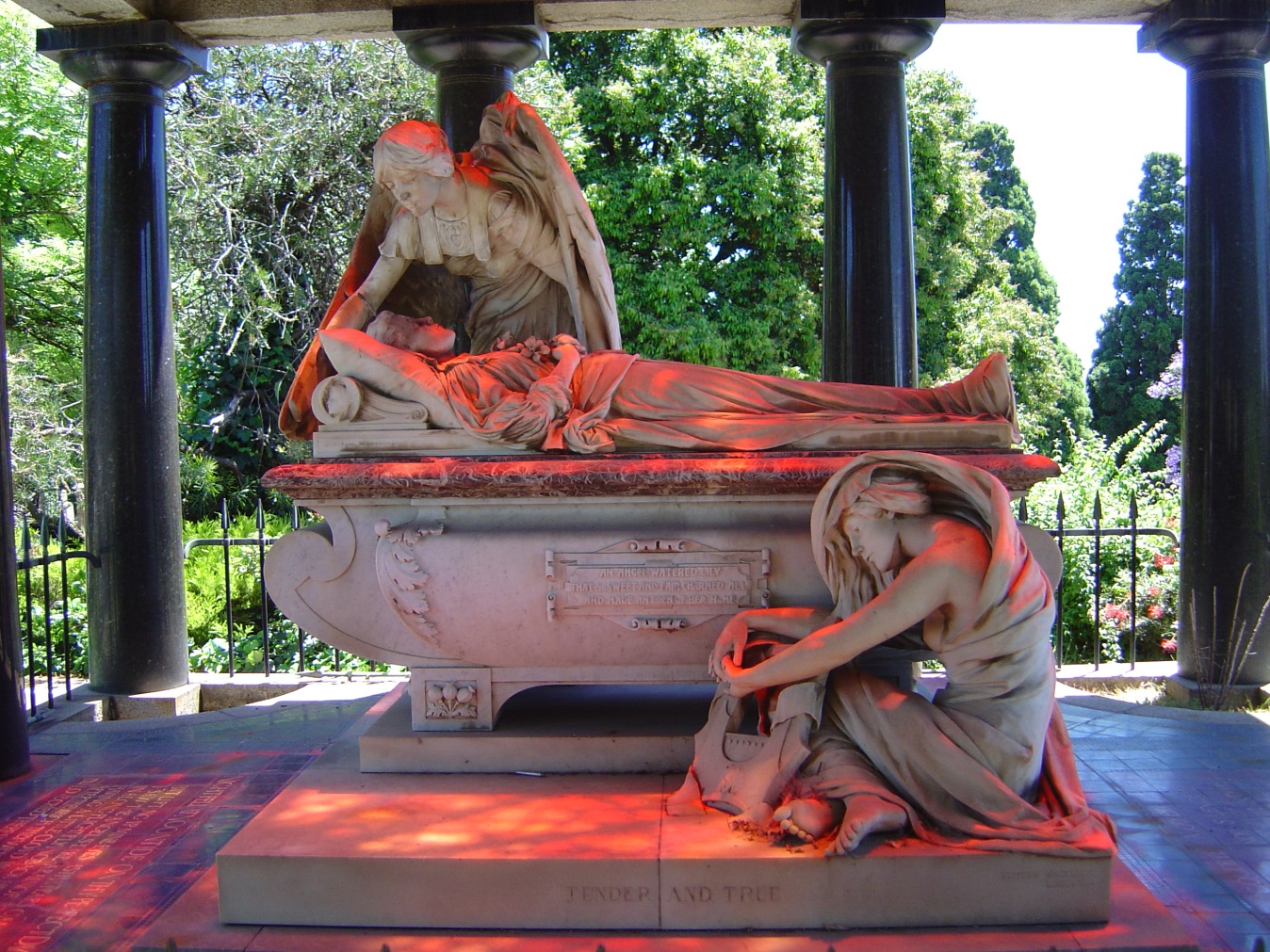
The Springthorpe memorial (in the Boroondara General Cemetery in Kew) was built by John Springthorpe in honour of his wife, Annie, who died in 1897 at the age of 30 while giving birth to their fourth child. Springthorpe wanted it to stand not only as a memorial for Annie, but also as an expression of the hope in loss for everyone, and thus her name was not inscribed on the memorial.
Springthorpe made many other contributions: for example, in 1924, he was the inaugural dean of the Faculty of Dentistry at the University of Melbourne. He also loved literature and was an art collector and a sportsman with interests in cycling, walking and football. In writing about Springthorpe, Dr Felix Meyer, a fellow physician, observed:
Throughout his career, independent thought and action and outspoken criticism were marked characteristics. With this independent spirit went a tenacity of purpose which made him formidable to those who did not see eye to eye with him … Anything like an abuse or misuse of authority roused his fighting spirit, and having espoused a cause, he threw himself wholeheartedly into it … He had great humanity; the pain and suffering of others touched him and moved him to action.
Dr Ernest Jones
William Ernest Jones (1867-1957) was born in England. Early in his career he was attracted to the study of lunacy, partly through interest and partly because by remaining in asylums he could avoid the high cost of buying into private practice.
In 1905, Ernest Jones was appointed inspector-general of the insane in Victoria. Notwithstanding later suggestions that he was selected through confusion with his namesake, the friend and biographer of Freud, he owed his position to references which highly commended his energy and administrative skills and to a successful interview with the former Victorian premier (Sir) William Irvine.
Soon after his arrival in Melbourne, Jones visited the six Victorian asylums. In a report to cabinet he criticised severe overcrowding, inadequate staffing and outmoded attitudes and recommended building improvements totalling £250,000. His early achievements included construction of a modern asylum at Mont Park and amendment of the Lunacy Act to allow the admission of patients at their own request.
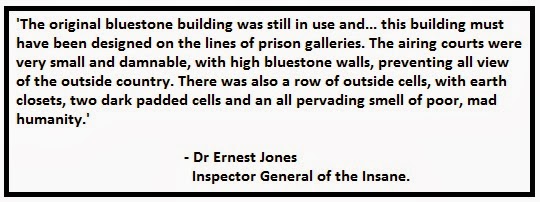
Dr Ernest Jones provides a grim epitaph for the Yarra Bend Asylum he helped to close down. It was not until 1924 that Yarra Bend stopped accepting new patients. Many patients were transferred to Mont Park.
In 1929, Jones conducted a federal government inquiry into the ‘mentally deficient’, which concluded that around three per cent of the Australian population fell into this category. Jones saw this as a grave threat to national efficiency and advocated eugenic ideals as a remedy, partly through the Council of Mental Hygiene which he helped to establish. At his instigation, the name of the Lunacy Department was changed to the Department of Mental Hygiene, and his own title altered to director of mental hygiene. He proposed eugenic research and urged the “inculcation of good hygiene in our matings”.
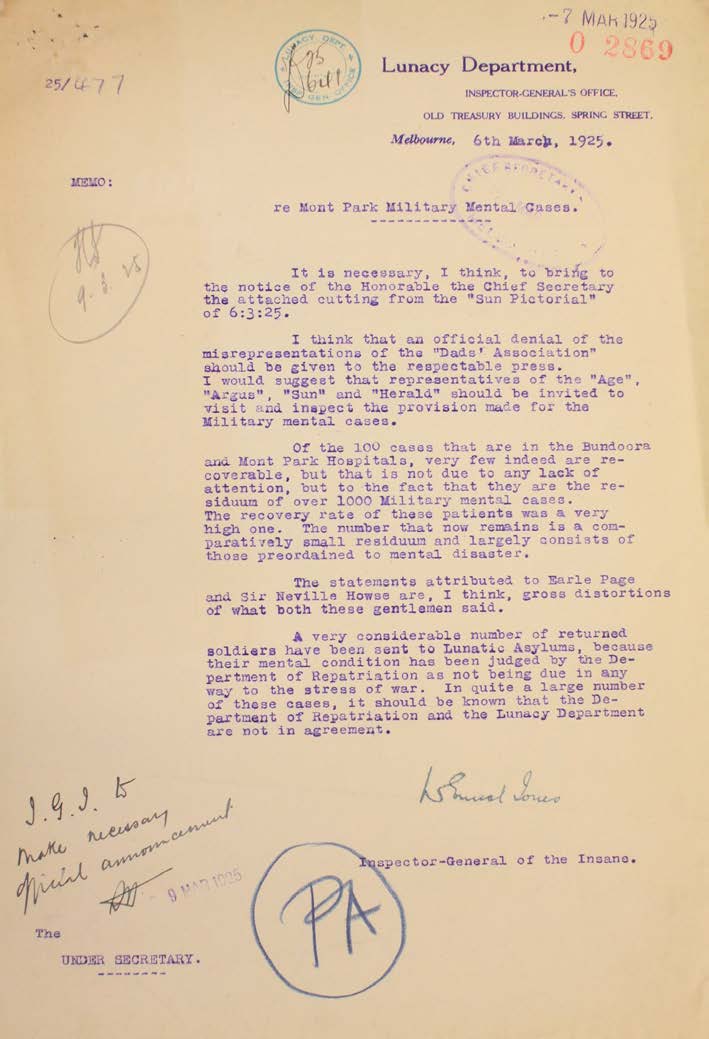
Letter from Ernest Jones (1925) objecting to the view of the President of the Sailors’ and Soldiers’ Fathers’ Association relating to repatriated soldiers and ‘lunatics’ being housed together.
Hugh Linaker
The landscape design is historically significant, owing much to early 20th century ideas about treatment and care. It is of tremendous horticultural and aesthetic significance as an early and important example of the work of the landscape designer, Hugh Linaker. Trees on the site are listed on the significant trees register, being uncommon examples or outstanding specimens of particular species.
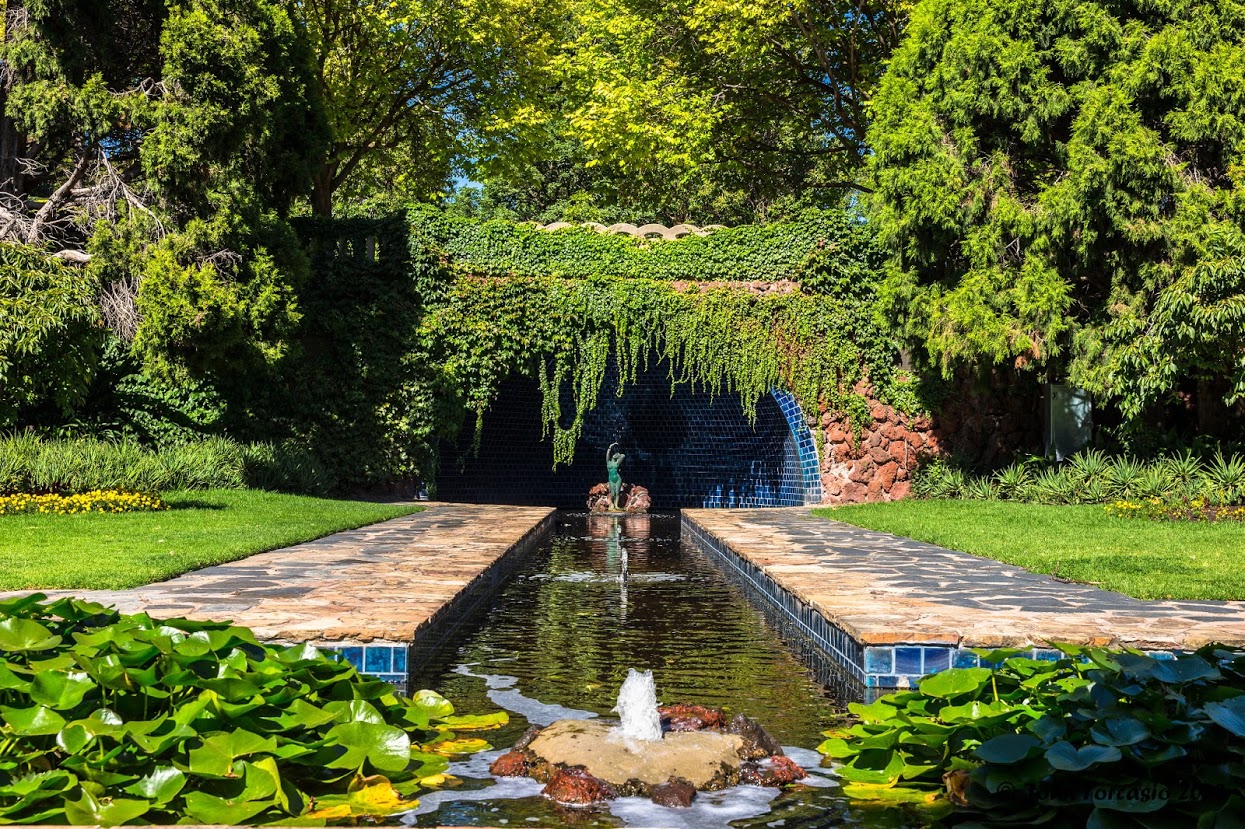
The Pioneer Women's Memorial Garden in Melbourne was designed by Hugh Linaker and features a bronze figure of a woman in tribute to the European pioneer women of the colony.
Linaker was one of the most significant landscape designers in Victoria in the early 20th century. Born in Ballarat in 1872, by the age of fourteen Linaker was apprenticed as a gardener to the Ballarat Botanical Gardens. In 1912, he was appointed as landscape gardener for Mont Park.
This appointment recognised the importance of pleasant surroundings for mental patients, and Linaker created sweeping landscapes of lawns and exotic and native trees, while retaining many of the majestic River Red Gums (Eucalyptus camaldulensis). Some are over 400 years old.
In 1933, Linaker was appointed Superintendent of Parks and Gardens for Victoria. During his career Linaker was responsible for the design and maintenance of the grounds in hospitals across Victoria. He was also involved in the design and approaches to the Shrine of Remembrance. While working at Mont Park, Linaker also prepared landscape plans for Hospitals for the Insane at Ararat, Ballarat, Beechworth and Sunbury as well as Pentridge and Castlemaine Gaols, Ballarat Supreme Court, Preston Shire Hall and Heidelberg Reserve. Linaker died in 1938.
Mont Park is an important example of Linaker’s landscape style, mixing exotics and native trees and contrasting forms especially narrow crowned and fastigiate forms and palms. These were often planted in alternative arrangements in the landscape to give a striking and contrasting image.
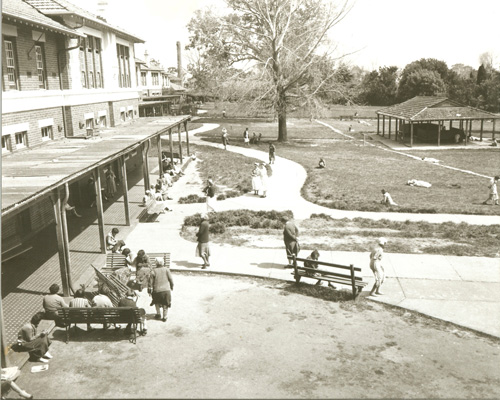
Mont Park. Photo undated – from the collection of Iliya Bircanin
The Avenue of Honour planted in 1919 consists of a row of 46 Sugar Gums planted by returned soldiers who were hospitalised in the number 16 Australian General Hospital (Chronic Wards) at Mont Park. This avenue is unusual in that Australian natives were used rather than the more common First World War plantings of elms and oaks. Further plantings were made after World War 2.
Architectural Design
The Chronic Wards and associated Administration Building were built in the Federation Free Style and contain terracotta tile roofs and rendered brick walls. These buildings were used as a military hospital during World War 1.The Nurses Home, the Hospital Block, the Mortuary and the Ernest Jones Chapel and Hall were all designed by the architect E Evan Smith.
Larundel Mental Hospital was built to take patients from Kew Mental Hospital, where facilities were outdated and local residents were objecting to a mental hospital nearby. Construction commenced in 1938 to a design by Public Works Department Architect, Percy Edgar Everett. Everett was appointed chief architect of the Victorian Public Works Department in 1934 and is best known for the dozens of often strikingly modernist State Government institutions such as schools, hospitals and police stations.
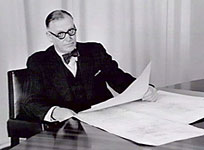
Percy Everett
In 1930, like many other Australian architects during the Great Depression, he undertook a world tour including the US and the UK as well as the Soviet Union. Two years later, in 1934, Everett was appointed chief architect in the Victorian Public Works Department. The Department was producing dynamic modernist designs for numerous high profile public buildings, many constructed just before or at the beginning of World War II. Essendon Technical School (1939), Camberwell Court House (1939) and the William Angliss College (1940) are considered amongst the best of this period. Influences from Dutch 1920s modernism, the German Bauhaus and 1920s Russian Constructivism can be discerned.
Water Tank on Gresswell Hill
In 1910, the Inspector General of the Insane commenced the construction of farm cottages, including in 1912 a 500,000 gallon water tank on Mount Sugarloaf (now Gresswell Hill).
The designer of the water tank was John Monash (later General Sir John Monash, 1865 – 1931), a civil engineer who ran a successful engineering business and later became the Australian military commander in World War 1. He had played a major role in introducing reinforced concrete to engineering practice. One of the great Allied generals of WW1, Monash University is named after him.
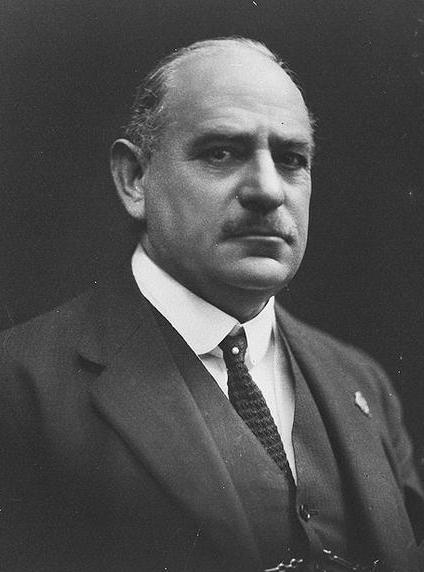
General Sir John Monash and in France during World War 1.
The Farm at Mont Park
Mont Park’s farm was an extensive operation and included sheep grazing, piggery, dairy, poultry for egg and meat production, orchard and vegetable garden. This reflected a ‘working with the land’ ideology as a refuge from the “greater stresses and strains” (Dr Jones) of model life. In 1912, the farm employed 212 patients and another 106 worked in the gardens. The farm supplied not only Mont Park Hospital, but also other mental institutions and even sold the excess produce. This kept costs down.
The farm continued to be worked by patients well into the1950s, but although milking machines were installed in 1954, many of the methods and equipment were primitive. However, according to Kenna, farming techniques were developed that were unique to Mental Health Farms.
A combination of factors – including changing treatment of mental illness, mainly using drugs, and a reduced inclination by patients in an increasingly urbanised society to do farm work – necessitated the employment of outside labour. Eventually the farm ceased to be viable. There were also complaints about the smells from residents in newly developing suburbs nearby, and so farming was abandoned. Much of the farm formed part of the new La Trobe University.
Australian Women’s Land Army
During World War 2, Mont Park was again called upon, this time to provide accommodation and training. The Australian Women’s Land Army was formed to combat rising labour shortages in the farming sector. From 1942 to 1945, the farm at Mont Park became a training centre, where women, presumably from the city, learnt to milk cows and plough, garden and care for animals, before they were sent out to work on farms. The supervisor was Mrs O. Mellor, the first woman to graduate as a landscape architect from the Burnley Horticultural College.
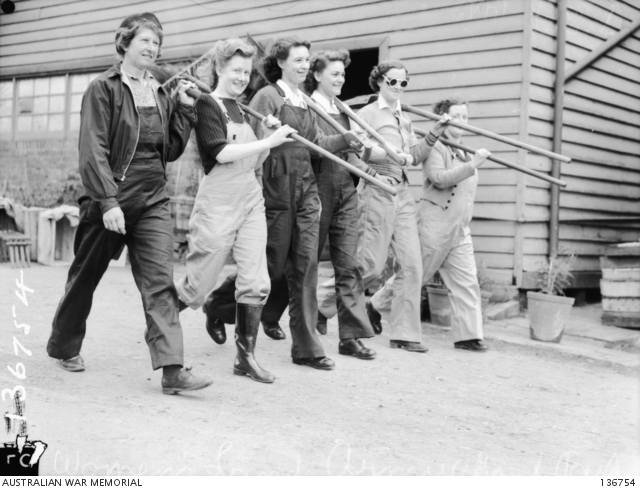
Mont Park 1942 – members of the Australian Women’s Land Army making their way to the fields during a training course.
At the same time, the newly completed Larundel Mental Hospital at Mont Park was taken over as the depot for the Women’s Auxiliary Australian Air Force. Between 1943 and 1945, the depot accommodated 5,000 women who were trained for Air Force duties that freed men for active service.
Deinstitutionalisation
The North-Eastern Metropolitan Psychiatric Services, or NEMPS, was once a true community. At its peak in the 1960s, almost 3,000 patients lived there. Staff played tennis, swam in the pool, worked as painters, carpenters and storemen. Nurses took beaus to dances at the Ernest Jones Hall.
By the 1990s, most former Larundel and Mont Park patients were at home or in self-contained nursesupervised units in the suburbs, as part of the deinstitutionalisation of Victoria's psychiatric services. It was the end of an era, with people seen less as incurable lunatics than as human beings who should be given at least a chance, as well as the skills that are needed, to rejoin society.
An article in ‘The Age’ in 1999 reported that Bee Mitchell-Dawson, who started work at Mont Park as a psychiatric nurse in 1985 and became manager for psychiatry at the Austin and Repatriation Medical Centre, said there was “still a fair bit of work to do” to remove the stigma associated with mental illness. Moving out of institutions would help. She added that:
It's so much easier for a family member to say `my mother, father, brother or sister is in the Austin Hospital', rather than say they're in Mont Park or Larundel.
Mitchell-Dawson said some patients who had been at the hospital for 15 to 20 years had adapted extremely well to community care units. `”I think they have a profoundly better quality of life,” she said. There had also been a shift towards recognising the right of individuals to have a say in their own treatment, rather than the “health professional knows best” view of old.
La Trobe University Wildlife Sanctuary
The La Trobe University Wildlife Sanctuary was established in 1967 as a project in the restoration and management of indigenous flora and fauna. The original sanctuary was only 6.5 hectares and has been added to over the years to now total 28.8 hectares.
There has been an extensive program of exotic plant eradication and the re-establishing of indigenous species of plants. The issues faced by the staff of the sanctuary include invasion by exotic plants and introduced animals (such as foxes cats and Common Mynahs). Since the 1970s, the Sanctuary has created a network of wetlands.
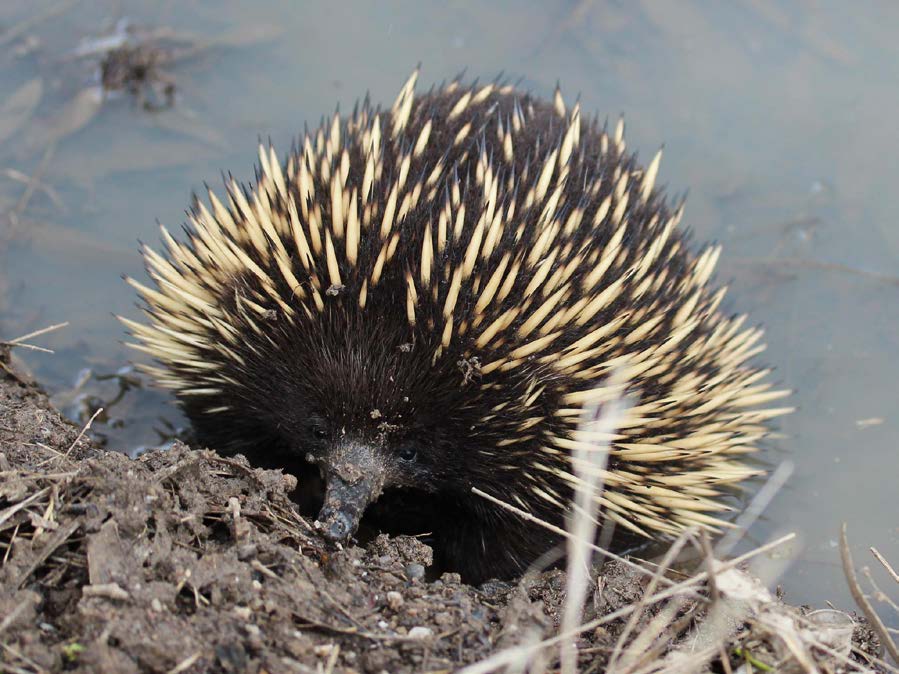
An Echidna in the La Trobe University Wildlife Sanctuary
The Sanctuary provides an indigenous natural home to 175 species of birds and mammals.
Natural History
The broader area was raised above sea level at the end of the Silurian period. The sedimentary rock was laid down in a marine environment about 400 million years ago. A volcanic eruption around 380 million years ago left a plug of quartz and feldspar (a plug is created when magma hardens within a vent on an active volcano) which became Gresswell Hill.
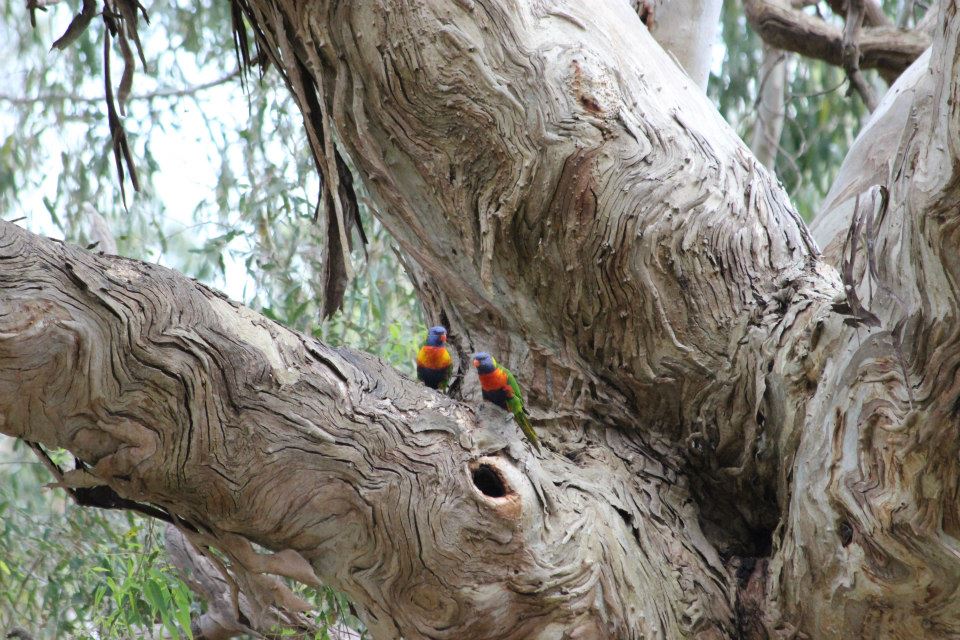
Rainbow Lorikeets in the La Trobe University Wildlife Sanctuary
There was a long period of weathering and erosion over 300 million years. Glaciers scoured off the wrinkles and flattened the land before dinosaurs appeared. Australia drifted away from Antarctica and New Zealand. A long period of volcanic eruptions started. At Mount Cooper (in Bundoora Park), along with the lava much volcanic ash was ejected, fusing the sands it covered into rocks. These rocks were used by the Wurundjeri people to make stone tools.
Prior to European settlement, much of the area was covered by a grassy woodland that included the River Red Gums, some over 2 metres in diameter and probably older than 500 years. Their massive canopies and hollow branches provided habitat for possums, gliders, parrots, cockatoos, goannas and other wildlife while the fallen branches sheltered wombats, echidnas, snakes, lizards and frogs.
Sources
A comprehensive list will be developed. Among the many sources for the extracts, information and images are:
- Australian Dictionary of Biography (various entries)
- Bircanin, Iliya and Short, Alex, Glimpses of the Past: Mont Park, Larundel, Plenty
- Bourke, Anne. ‘The Lure of the Land – Mont Park Hospital for the Insane, Green Fields, Brown
- Fields, New Fields: Proceedings of the 10th Urban History/Planning History Conference (edited
by David Nichols et. al)
- Broome, Richard (2005). Aboriginal Victorians: A History Since 1800
- City of Darebin Heritage Study Volume 1: Thematic Environmental History
- Elefsiniotis, Vaso, Victorian Aboriginal Education Association Incorporated
- Ellender, Isabel; Peter Christiansen (2001). People of the Merri Merri. The Wurundjeri in
- Colonial Days
- Heritage Victoria database entry entitled ‘Former Mont Park Hospital’
- La Trobe University Wildlife Sanctuary ‘History of the Area’
- Museum Victoria, ‘Confinement and seclusion in Victorian Mental Health Institutions’
- Robson, Belinda, Public Record Office Victoria, ‘From Mental Hygiene to Community Mental
- Health’
- Saniga, Andrew, Making Landscape Architecture in Australia (2012)
- University of Melbourne, ‘John William Springthorpe’, entry in the History of Medicine,
- Dentistry & Health Sciences
- Urban Pacific, Springthorpe Environmental Awareness Guide
- Wikipedia (various articles)
- Wilkins, Phoebe, Public Record Office Victoria. ‘War wounded: Mont Park Hospital for the
- Insane’
- Webb, Carolyn, Doors Close On Larundel `psychopolis', The Age, Saturday July 17, 1999.
